An overlooked garden is rarely hopeless, but it is usually misunderstood. Most people try to solve it with one tall thing along the boundary and end up with a dark, boxed-in yard that feels worse than the view did. The better approach is to break the sightlines into pieces, block the two or three that actually bother you, and leave everything else open so light still reaches your borders and your seating area.
Start with the Sightlines, Not the Shopping List
Sit where you actually sit — the bench, the patio table, the spot by the back door — and look around at six in the evening. Then stand at the kitchen window and look out. Then walk the boundary slowly. What you are mapping is not "privacy" in the abstract, but specific views: the neighbour's upstairs window, the gap between two fence panels, the road beyond the hedge, the wheelie bins.
Most gardens only have two or three views that genuinely matter, and they are often at different heights. The loft window needs something above two metres; the gap in the fence needs almost nothing. Check again in winter, when deciduous leaves have gone — a screen that worked beautifully in July can be transparent by January. Photographs taken from your main seating spot, at a few times of day, will tell you more than standing and squinting ever will.
Quick Fixes That Buy You Time
Before you commit to structures, try the cheap moves. They are surprisingly effective and they buy you the season you need to plant properly.
- Move the seating. Rotating a bench or a table by 90 degrees can drop an entire upstairs window out of your eye line for nothing.
- Raise the boundary planting. A border of tall grasses, verbena or mixed perennials at roughly waist to chest height softens and obscures much of what lies beyond.
- Angle a parasol or shade sail. Tilted towards the offending view, a sail on two posts creates a private corner without touching the boundary.
- Add a trellis topper. Fixing trellis above an existing fence is usually the cheapest way to gain half a metre. Make sure the posts are sound and the fixings are substantial — a topper catches wind like a sail.
- Use climbers on the fence. Jasmine, climbing hydrangea, ivy and roses add texture and depth, and they break up a hard line far better than a taller solid panel would.
Evergreen Structure: The Backbone Most Gardens Need
Deciduous planting is generous and seasonal, but privacy is a year-round job. This is where evergreen structure earns its keep, and it is worth doing properly rather than cheaply.
Hedges
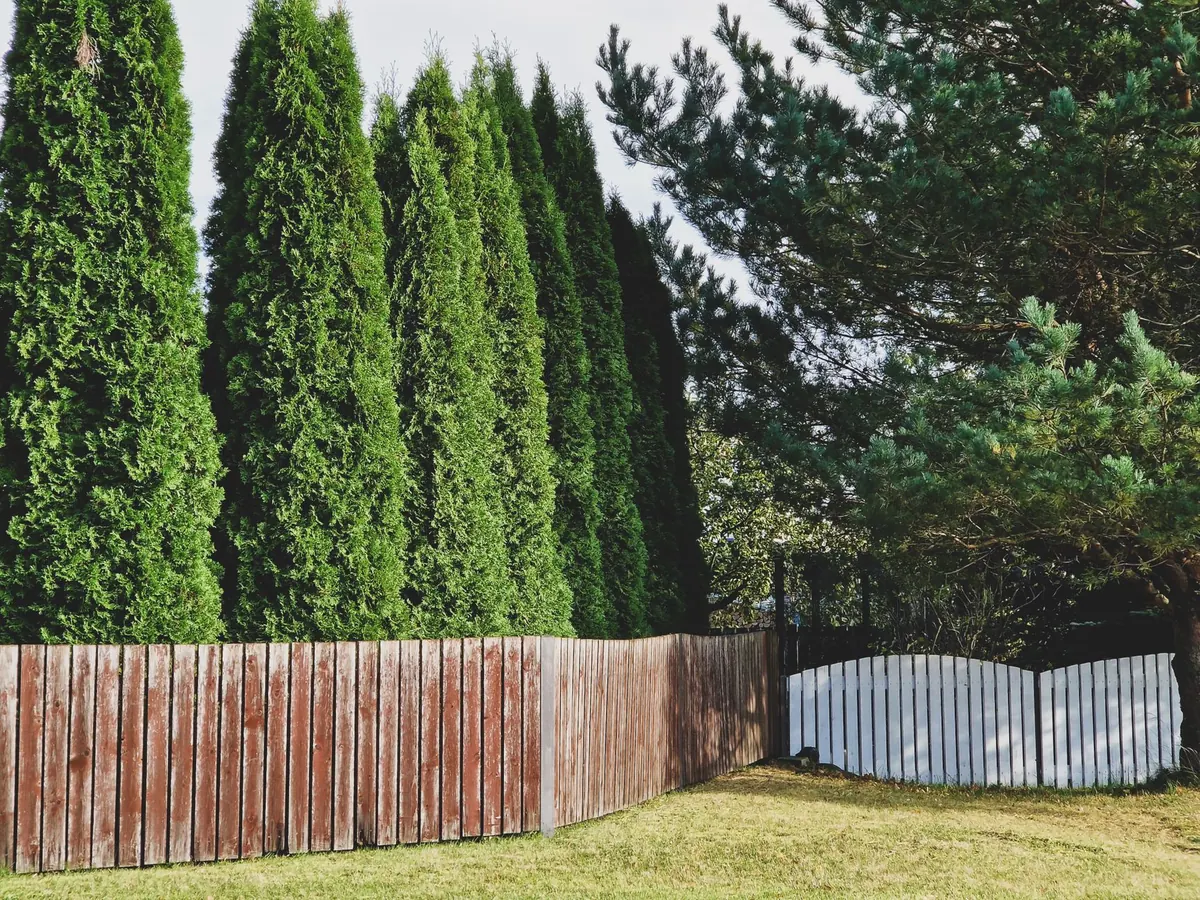
Yew, holly, Portuguese laurel andPhotinia all clip well and form dense, reliable screens. Hornbeam and beech hold their leaves through winter when clipped as a hedge, which makes them useful where the soil is heavy or damp and yew sulks. Keep a boundary hedge to roughly head height or a little above; going higher darkens the whole garden and can bring you into conversations with your local authority about high hedges. If you want more height without more shade, plant it on the north or east boundary, where the shadow falls away from you.
Pleached and multi-stem trees
This is the single best trick for small, overlooked gardens. A pleached tree is trained onto a frame so it carries a flat, square head on a clear stem. Hornbeam, lime and photinia are all widely grown this way. You get screening at two and a half to three metres with light pouring underneath, and because the canopy sits above head height, the ground stays usable. Space them along a boundary and they read as a green wall rather than a row of trees. Plant bare-root or rootballed in autumn or winter, water them well through their first two summers, and keep the frames tied in.
Bamboo, with a caveat
Bamboo screens look good and establish fast, but choose a clumping species such as Fargesia rather than a running bamboo, which will travel under paths and into next door's lawn. Even clumping types benefit from a root barrier if you are planting near a boundary.
Screens and Structures: Where to Spend Wisely
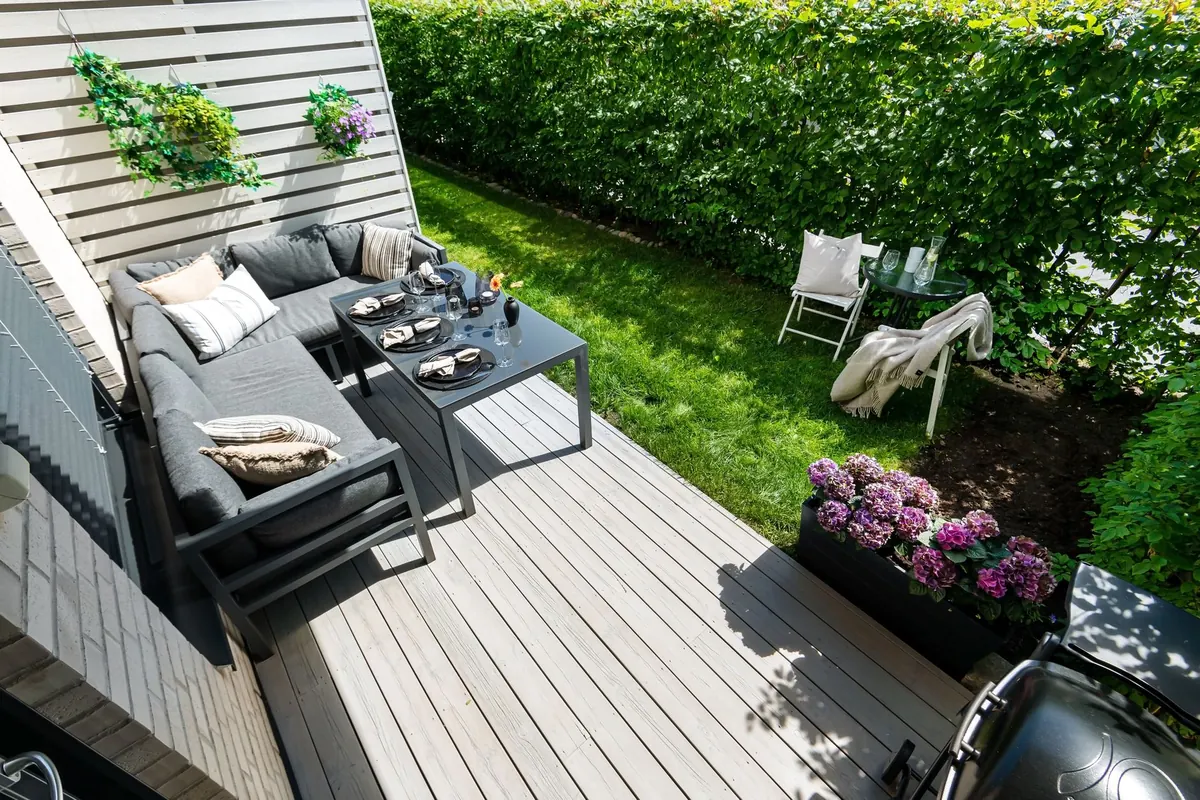
Slatted screens have largely replaced solid panels for good reason. With gaps of a few centimetres between slats, they interrupt a sightline while letting light and air through, and they do not bake the garden in summer the way a solid wall does. Horizontal slats look calmer; vertical battens suit narrow, contemporary gardens. Timber, aluminium and composite all work, and a slatted screen at an angle to the boundary is often better than one flat against it, because it directs the view away from you.
Pergolas and arbour-style frames work above head height, particularly draped with a deciduous climber such as wisteria or grape — dense in summer, open in winter when you are indoors anyway.
One practical point before you build: in the UK a fence over two metres high generally needs planning permission, and the limit is lower beside a highway. High hedges can also be subject to council involvement if they affect a neighbour's light. Check with your local planning authority before ordering materials or hiring anyone, and speak to your neighbour first — a short conversation prevents most disputes.
Block the View, Keep the Light
Light is the thing people surrender too readily. A few principles keep it:
- Slatted beats solid. Gaps maintain light and airflow.
- Go up rather than out. Pleached trees and columnar evergreens screen high without filling your garden with shade.
- Put the tall structure on the shadiest boundary. Keep the south and west sides low.
- Plant at height. A hedge on a low retaining wall does the job of a much taller hedge.
- Use pale surfaces. Soft grey fencing, light gravel and cream render bounce light back into the space.
- Plant between you and the boundary. If you cannot see the fence from your chair, you will not see what is beyond it either.
Make It Feel Private, Not Fortified
The best-screened gardens rarely look screened. Depth does that work: a low layer of shrubs, a mid layer of perennials, and the screen behind them, so your eye stops at something attractive before it reaches the boundary. Sound helps too — a small water feature, rustling grasses or a hedge full of birds turns a defensive boundary into a room you want to sit in. Add a bench, a table and something to shade you, and you will use the space as a retreat rather than a barricade.
Where to Start This Weekend
Measure your boundary, note the two or three views that actually trouble you, and write down the height and width each one needs. Then tackle it in order of cost and permanence: move the furniture, angle a parasol, add trellis toppers or slatted panels, and plant structure in the dormant season when bare-root and rootballed stock is available. If you are planting a hedge, prepare the ground properly, mulch well and water through the first two summers. For anything on the boundary itself, or in a conservation area or listed building, check with your local planning authority before you start — the rules vary and it is far easier to ask first.
Photo: Hanno / Pexels