British weather doesn't do moderation. A bench can sit in warm sun on Saturday and be frozen into the lawn by Tuesday, and the rain that arrives sideways in November has a habit of finding every seam, screw hole and cushion zip you own. Furniture that looks lovely in a showroom photo can look very different after a winter of damp air and frost. The good news is that surviving here is mostly about choosing the right materials, then doing a few small things well.
Begin With the Spot, Not the Set
Before you think about materials, look at where the furniture will actually stand. A sheltered courtyard against a south-facing wall stays noticeably drier than an exposed corner that catches the wind, and a patio under trees collects leaf litter, sap and bird mess along with the rain. Ask yourself:
- Does the area drain freely, or does it stay wet for days after rain?
- Is it in permanent shade? Shade plus damp is the combination that grows green algae on wood and black spots on fabric.
- Do you have somewhere to put things away — a shed, a garage, a spare corner of a conservatory?
- Will you be moving pieces on your own? Heavy cast-iron and stone sets don't get moved as often as people intend.
If storage is limited, choose lighter pieces and plan to stack or fold them. If you want furniture to stay out all year, buy for that from the start.
Materials: What Actually Copes
Hardwood
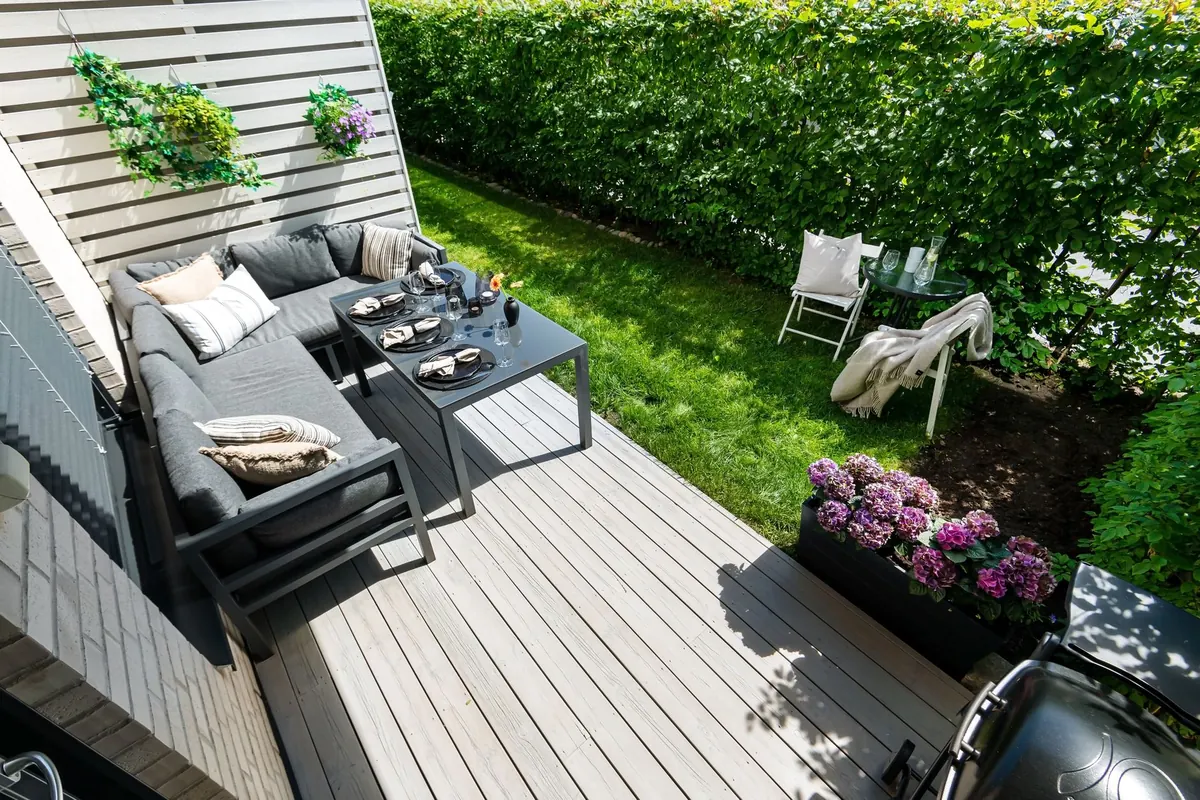
Teak, robinia and eucalyptus are dense, oily timbers that handle wet and cold far better than softwood. Untreated teak weathers to a silver-grey, which many people like; oiling keeps the honey colour but needs doing roughly once or twice a year. Cheap softwood will rot at the joints and feet within a few seasons unless it is properly treated and re-treated. Look closely at the joints — a wooden set lives or dies by its tenons and dowels, not its surface.
Metal
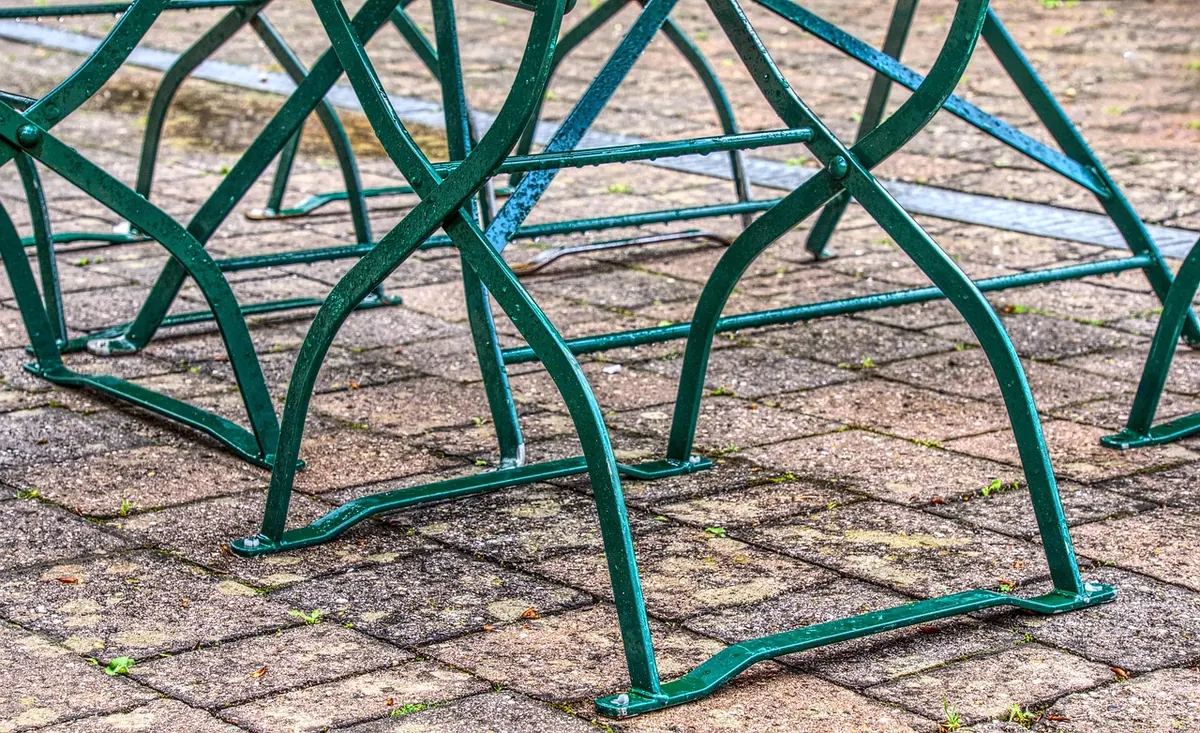
Powder-coated aluminium is the safest bet: it doesn't rust, it's light enough to move, and it won't split in frost. Steel is strong and often cheaper, but any chip in the coating becomes a rust spot that spreads, so touch up scratches with matching paint while they're still small. Wrought iron is heavy and durable but prefers a spot that isn't permanently wet. Watch the fixings: stainless steel or galvanised bolts are a good sign.
Synthetic rattan and resin wicker
Good-quality HDPE wicker over an aluminium frame handles rain well and looks convincing. Cheaper versions use a brittle resin that goes chalky and cracks after a couple of cold winters, and some hide a steel frame that rusts from the inside. Press the weave in the shop — it should flex slightly and spring back, not creak.
Plastic
Modern polypropylene is genuinely weatherproof, light and inexpensive. It can fade and become brittle after years of UV, and pale colours show algae, but for a small balcony or a set that gets shifted constantly, it's a sensible choice.
As a rough guide:
- Best for all-year exposure: powder-coated aluminium, teak, HDPE wicker.
- Fine with a bit of care: steel with an intact coating, oiled hardwood, polypropylene.
- Needs covering or storing: untreated softwood, mild steel, thin resin wicker, and anything with standard foam cushions.
Cushions and Fabric: The Part That Fails First
Frames usually outlast cushions by years. The problem isn't rain landing on a cushion; it's water getting inside and staying there. Standard foam soaks like a sponge, and once it's wet it can grow mould long before it dries in a British autumn.
Look for quick-dry foam, which is open-celled and lets water drain through, and for removable, washable covers in solution-dyed acrylic or polyester. Solution-dyed means the colour sits in the fibre rather than being painted on, so it resists fading. Even so, no fabric is truly weatherproof forever.
Practical habits make the biggest difference:
- Tip cushions on their edge after rain so water runs off instead of pooling in the middle.
- Bring them in overnight during wet spells. A minute's work saves an afternoon of drying.
- Never store cushions damp. Let them dry fully in moving air, then store in a breathable bag rather than a sealed plastic one.
- Wipe spills and bird mess with warm soapy water rather than a harsh cleaner, and dry covers in the shade to protect the colour.
Covers: Helpful, But Not Always
A cover isn't automatically a kindness. A cheap plastic tarpaulin traps condensation underneath, and by February you can find a frame wrapped in damp air with mould creeping across it. What you want is a breathable, water-repellent cover — one that lets vapour out while keeping rain off.
Fit matters as much as material. A loose cover flaps in the wind, scuffs the frame and pools water in the middle, while one that's too small simply blows off. Secure it with ties or a weighted hem, because wind is what kills covers. Don't cover wet furniture; wait for a dry afternoon. If your table has a dip in the middle, use a cover with a raised centre or prop a pole underneath so rain sheds instead of collecting.
An End-of-Season Routine That Takes an Afternoon
- Clean everything with warm soapy water and a soft brush. Dirt holds moisture against the surface.
- Dry thoroughly on a breezy day. Check joints and the undersides of tabletops, where water hides.
- Treat wood: sand lightly if the grain has lifted, then apply a suitable oil or wood protector.
- Touch up metal: sand rust spots back to bare metal and repaint with a matching metal paint.
- Wash and dry cushion covers, then store them separately from the frames.
- Store indoors, or under a breathable cover in a spot where air can move around it. Stack pieces so water can't collect in them.
Choosing Well in the Shop
Before you buy, do three things. Sit on it and shift your weight — a wobbly set only gets worse outdoors. Turn it over and inspect the frame and fixings; aluminium with stainless bolts is a good sign, while rust-coloured welds are not. Then check whether replacement cushions, glides and covers are available, because a set you can refresh will last years longer than one you can't. Ask about the warranty and read what it excludes. Weather damage is often excluded, which tells you what the maker expects to happen.
Making It Last
Furniture that survives British weather isn't magic, and it isn't always expensive. Choose materials suited to being wet, keep water out of cushions, cover with something breathable rather than airtight, and give everything an hour of attention in autumn. Do that, and a decent set will still be worth sitting on when the first warm evening finally arrives — which, in this country, is the whole point.
Photo: distelAPPArath / Pixabay